
The Migration in the Mara
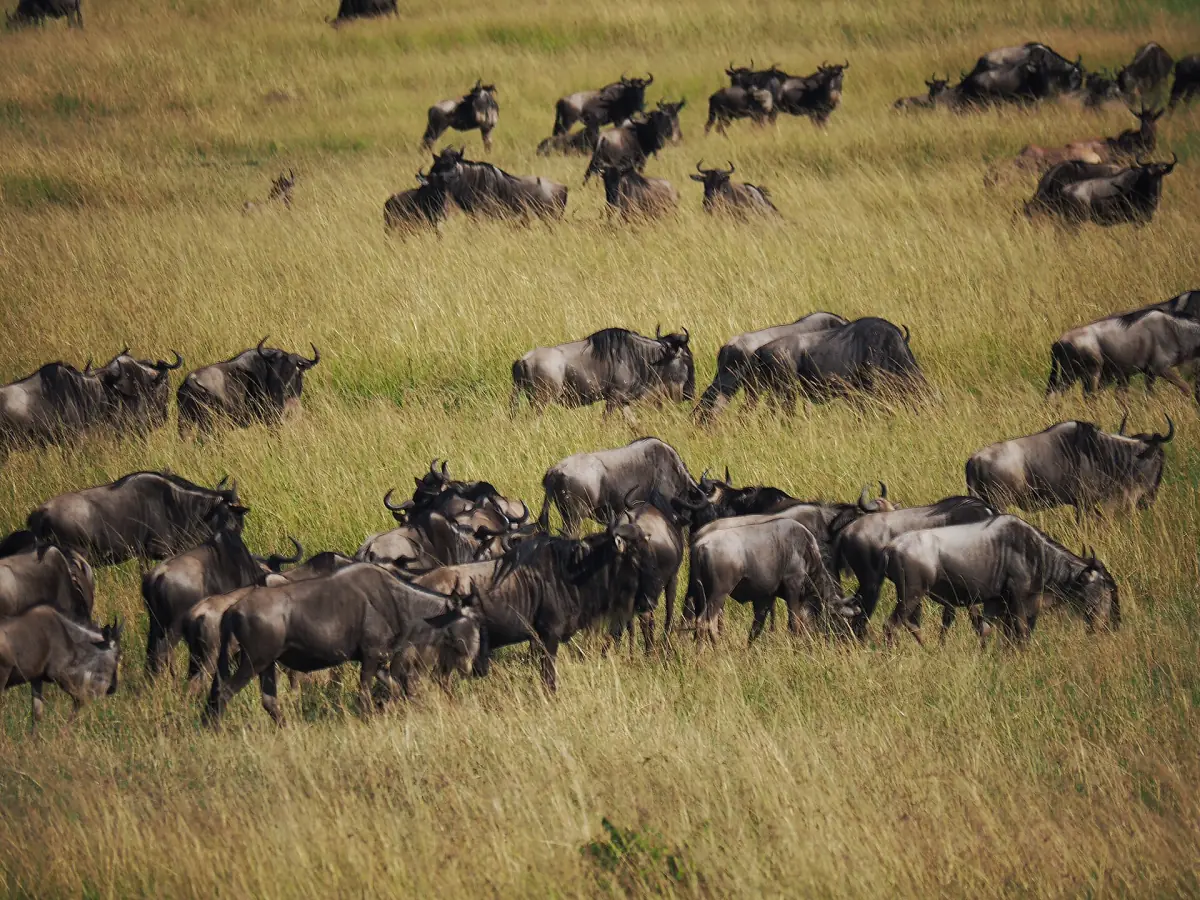
The Great Migration is the yearly movement of wildebeest, zebra and other grazers between Tanzania and Kenya. The Maasai Mara is the northern end of that ecosystem. The herds normally reach the Mara in June or July and leave in November. Those months describe a usual pattern, not a calendar.
In the Mara Triangle, herds move via Sand River and Look-Out Hill towards the Mara River. A river crossing is one possible event within the Migration. It is not the same thing as the whole Migration. Crossings happen often while the herds are in the area, but they are hard to predict, and neither the hour nor the day can be known in advance.
Migration, fee season and what each means
Three calendars that do not line up.
| Calendar | Period | What it means for you |
|---|---|---|
| Usual Migration presence | June or July to November | A guide for planning. Herds can arrive early, late or leave early. |
| Narrower planning window | July to October | The months most visitors target for crossings. No guarantee. |
| Higher park fee season | 1 July to 31 December | $200 a day for a non-resident adult in 2026, against $100 from January to June. |
| Camp and flight rates | Each operator sets its own calendar | Check the season dates in each quote. |
The higher fee season does not end when the herds leave. It runs to the end of December. See the park fees page.
Our picks: safaris in the Mara
Game-drive trips of different lengths. Herd movements vary from year to year, so no tour can promise them.
Hand-picked tours, booked through GetYourGuide. Prices are indicative starting prices in US dollars (as of October 2026). Tap a tour for live availability and the current price in your currency.
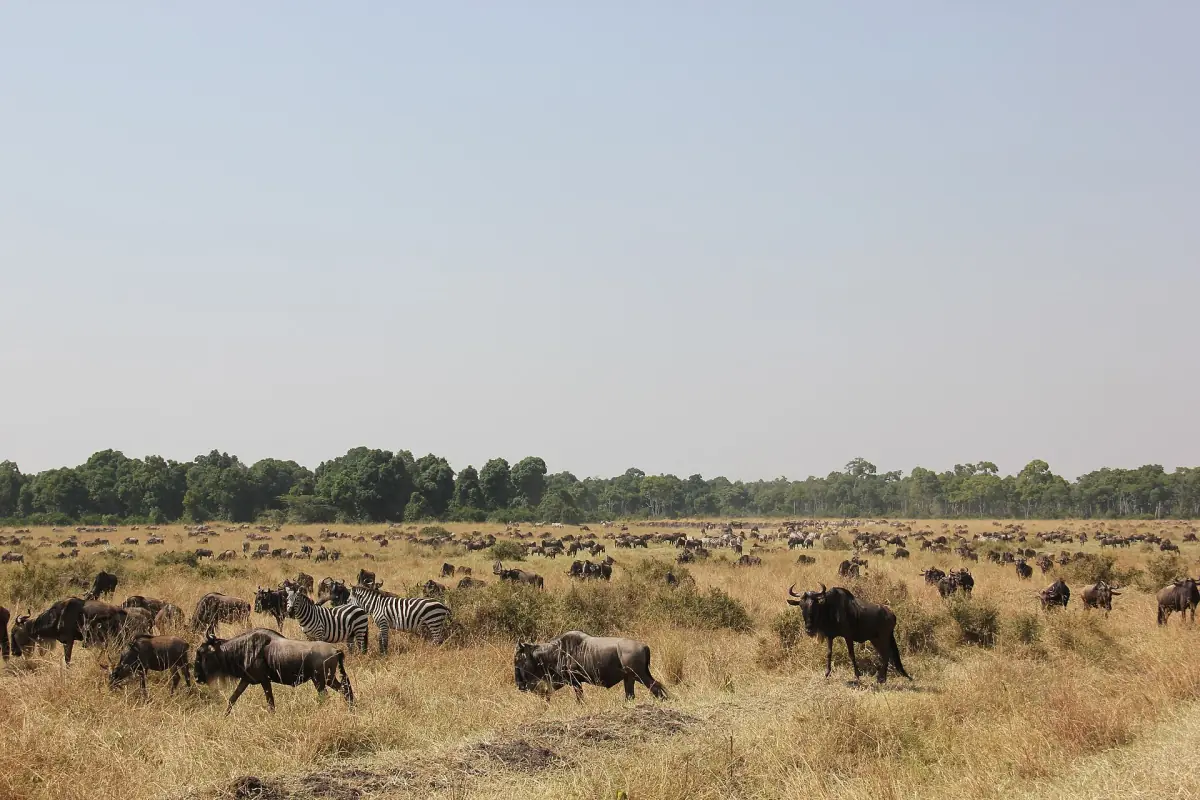
3-day private safari in a Landcruiser
A private 4x4 Landcruiser with a certified guide, two lodge nights with full board, Nairobi transfers and park entry. The balloon flight, a village visit and tips are extra.
Check availability →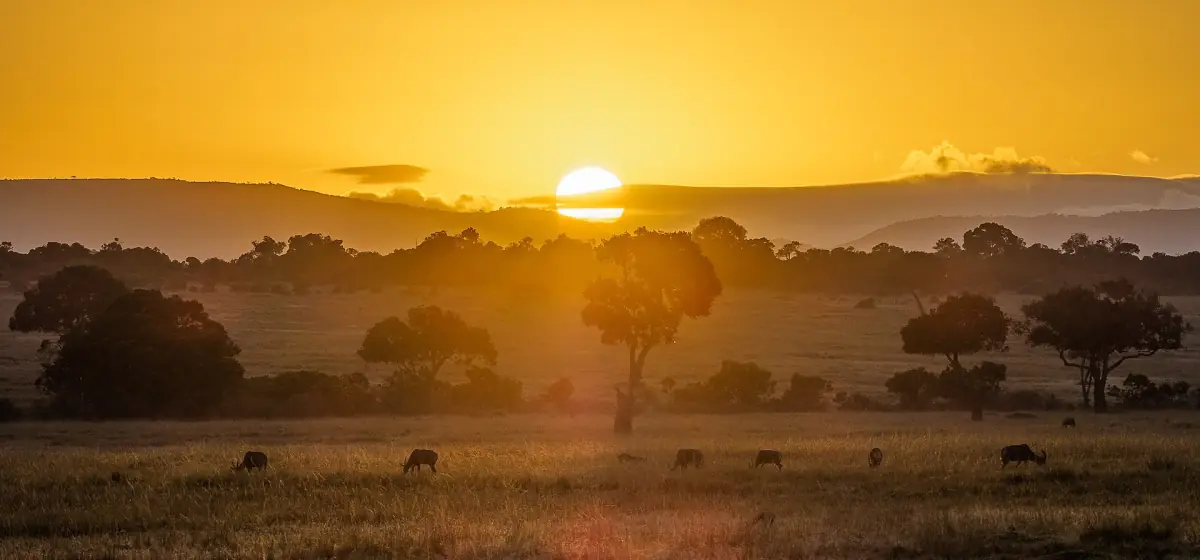
4-day camping safari to the Mara and Lake Nakuru
A shared 4WD Landcruiser, three nights (two in the Mara, one at Nakuru), full board and game drives. Park fees, a village visit and tips are extra.
Check availability →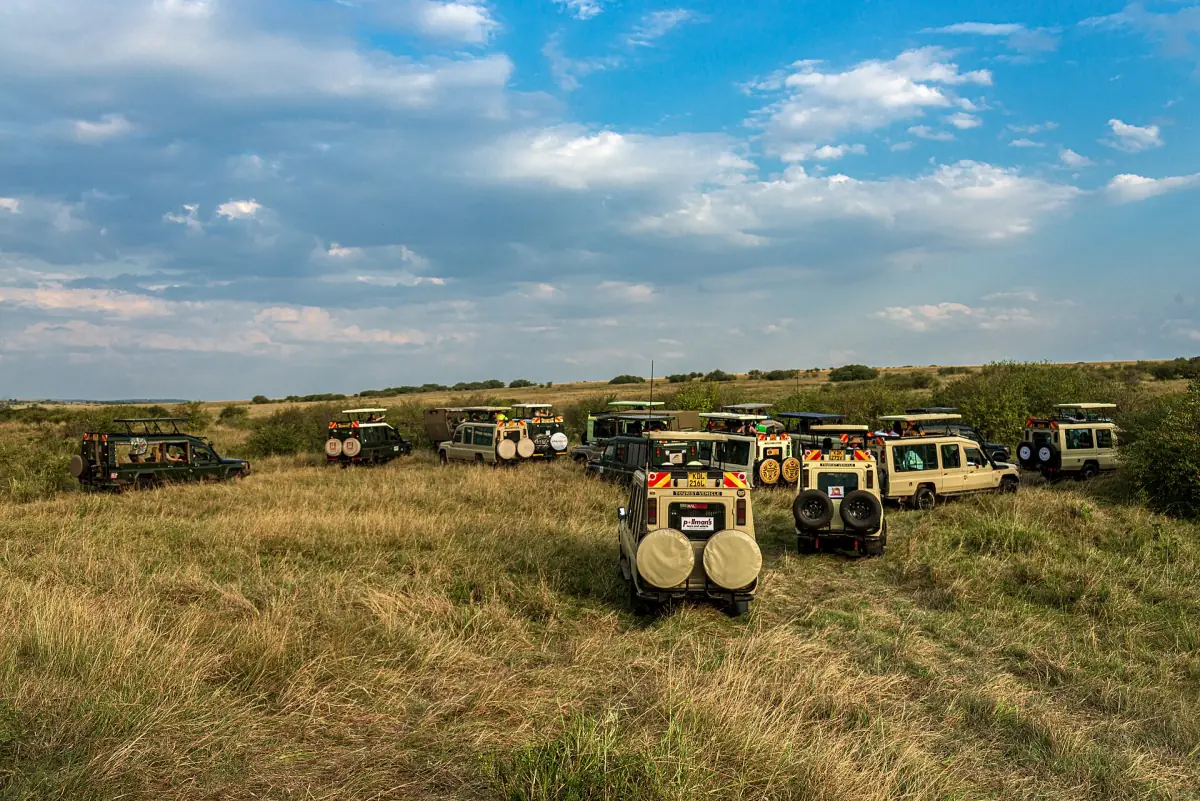
3-day Landcruiser safari with pop-up roof
A 4WD Landcruiser with pop-up roof, a driver-guide, full board and two nights in a private tent with bathroom. Park fees for both days, drinks at camp and the balloon flight are extra.
Check availability →Migration season tours in the Maasai Mara
Safaris and day trips for the months when the herds are in the area, with live prices and availability.
What can change from year to year
Why dates are a guide and nothing more.
Herds move with the weather
In August 2026, heavy rain sent many herds in the Triangle back towards the Serengeti within days. A good week can be followed by an empty plain.
Crossings are one event of many
Wildebeest also graze and travel across the plains. A trip planned around a single crossing can miss it and still show you large herds.
Only one side of the story
The Migration is a circuit that includes Tanzania. Its yearly cycle and the Serengeti routes are covered by the Serengeti guide. Do not book a Kenyan camp on the promise of a Serengeti crossing.
Where the herds are seen
The Mara River is the best-known place, but it is not the only one. In the Mara Triangle, the herds move from Sand River and Look-Out Hill towards the river, and they also graze on the plains between Serena and the Mara Bridge. Ask your guide where the herds are on the day.
Ask your operator to tell you plainly where your camp lies. A camp in the east, one in the Triangle and one in a conservancy are reached by different roads and see different parts of the Mara. A conservancy is not part of the national reserve. Read where to stay before you choose.
How to behave at a river crossing
Crossings draw many vehicles, and a few simple rules keep the animals moving and everyone safe.
- Stay in the vehicle: get out only at marked points.
- Be quiet: noise can stop a herd at the bank.
- Leave the access clear: never block the approach or the direction of the crowd.
- Stay seated: do not stand on the roof or sit on the window frame.
Rules at any sighting also apply when many vehicles gather. In the Mara Triangle, when more than 5 vehicles wait, the viewing time is limited to 10 minutes and waiting vehicles stay 100 m away. Driving off the track to get closer is not a general permission. Approaching big cats is allowed only in low-use zones, up to 25 m, and you must return by the same route.
Do not swim in the river or wade near the banks. Getting out is allowed only at designated points, and that is no permission to bathe.
For the animals you may see around a crossing, read the wildlife page. For the months in a wider context, see the best time to visit.
Planning around the Migration
Practical choices that raise your chances.
Best time to visit
Migration, rains and fee seasons side by side.
Safaris compared
How many drives and which format fits a crossing.
Park fees
The July to December rate and how the day ticket works.
A longer stay gives more drives and more chances, and it never turns a crossing into a certainty.
The Great Migration: frequently asked questions
When does the Migration reach the Mara?
Normally in June or July, and it ends in November. July to October is the narrower planning window. These are usual months, not fixed dates.
Can I be sure to see a river crossing?
No. Crossings are hard to predict, and the hour and day cannot be known in advance. The herds can also move away after heavy rain.
Is the Migration the same as a river crossing?
No. A crossing is one possible event within the Migration, which also includes grazing and travelling over the plains.
Does the Migration affect the price?
The park fee changes on 1 July and stays higher until the end of December, so it follows the fee calendar, not the herds. Camp rates follow each camp's own seasons.
Can I stand on the vehicle roof for a better view?
No. Stay seated in the vehicle and do not stand on the roof or sit on the window frame. Get out only at designated points.
How long should I stay to see a crossing?
No number of days guarantees one. More days mean more drives, and that raises your chances without making a crossing certain.
What about the Serengeti side?
The Tanzanian part of the cycle and its routes are covered in the Serengeti guide, which you can reach through the link in this page. This page stays with the Mara.